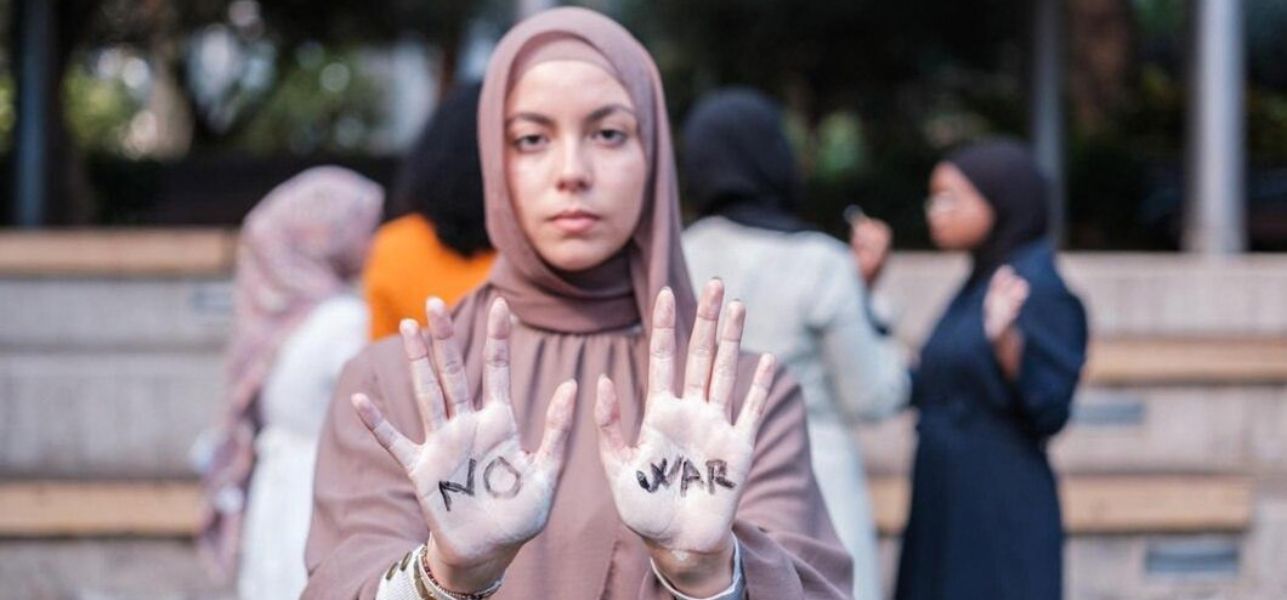
The rise in hostility toward Muslims during times of conflict is sadly predictable. When fear rises, some people including prominent public voices begin to generalize, dehumanize, and recycle old prejudices. Today, as war shakes the Middle East, some Islamophobes in the United States, even in Congress, have claimed that Islam is not a religion but a cult. This is not only factually wrong it is morally and spiritually harmful.
But as Muslims, we choose a higher path.
We respond not with anger, but with clarity, dignity, and love, because this is the prophetic way. “Repel evil with what is better.” (Qur’an 41:34) “Invite to the way of your Lord with wisdom and beautiful counsel.” (Qur’an 16:125)
I. What Islam Actually Is
Islam is a universal, 1,400‑year faith that has shaped law, ethics, art, science, and civilization across cultures and continents. It is scriptural rooted in the Qur’an and accessible: no priestly class controls access to God; every person prays directly to the One. The Qur’an addresses all humanity, affirming human dignity and calling for justice, mercy, and truth.
Human dignity: “We created you from a male and a female and made you into nations and tribes so that you may know one another. The most honored of you in God’s sight is the most God‑conscious.” (Qur’an 49:13)
Religious freedom: “There is no compulsion in religion.” (Qur’an 2:256)
Justice for all: “Be steadfast in justice… and do not let hatred of a people cause you to swerve from justice. Be just—that is nearer to piety.” (Qur’an 5:8)
A cult is typically secretive, coercive, centered on a single human leader, and cut off from broader intellectual traditions. Islam is the opposite: open, universal, intellectually rich, and historically deep spanning every race, language, and social class.
II. Islam’s Mission: Elevating Human Character and Consciousness
The heart of Islam is tazkiyah (inner purification) and ihsan (spiritual excellence). Properly understood, Islam is a project of raising consciousness transforming the human being from:
fear → trust in God
anger → mercy
pride → humility
ego → soul
The Prophet ﷺ expressed his mission succinctly: “I was sent only to perfect noble character.” Noble character is elevated consciousness in action toward family, neighbors, strangers, and even opponents. This is why Muslims strive to be muslimeen workers of peace because Islam (from S‑L‑M) is about wholeness, safety, and peace.
When Islam is misrepresented, the instinct to push back harshly is understandable, but it is counterproductive. The prophetic model is moral courage with emotional grace. The Prophet ﷺ said, “The strong person is not the one who overpowers others, but the one who controls himself when angry.” Responding with composure is not weakness; it is transformative strength. Hence, as Americans, we pray that our response will always be to love God and to love all our neighbors.
III. Address the Fear Beneath the Prejudice
Much of Islamophobia is fueled by fear and unfamiliarity, not facts. Fear yields oversimplification: “Those people are the problem.” Love and knowledge widen horizons: “These are my neighbors what do they actually believe?” The Qur’an reminds us that God does not forbid us from dealing kindly and justly with those who do not fight us on account of our faith (Qur’an 60:8). Relationship, encounter, and service are antidotes to fear.
IV. Shift the Frame: From Politics to First Principles
When discourse reduces Islam to geopolitics, we all lose moral clarity. Re‑center the conversation on first principles:
God is near; prayer, gratitude, and responsibility dignify life.
Every human being bears inherent dignity.
Justice is non‑negotiable; cruelty is never righteous.
The higher aim is character truthfulness, compassion, patience, courage.
Communities flourish when we serve the common good.
These are not slogans; they are the foundations of a healthy multi‑faith democracy.
VI. Show the Fruits, Not Just the Arguments
Hearts rarely change because of debate alone; they soften when they see goodness embodied. Let our neighbors see:
Muslims organizing blood drives, food pantries, and relief for victims regardless of religion.
Mosques partnering with synagogues, churches, and civic groups.
Youth mentored into purpose, not polarization.
Elders modeling patience and integrity in public life.
When people taste the fruit, the tree makes sense.
VII. Practical Guidance for Responding
Lead with love. “Peace be upon you” is not a greeting only it’s a posture.
Clarify calmly. “I understand the fear you may feel. Here is what Islam actually teaches…”
Humanize. Share your story; invite questions; welcome dialogue.
Stand for everyone’s dignity. Defend the rights of others as you defend your own.
Be consistent. Private virtue and public voice must align. Hypocrisy breeds cynicism.
Keep the door open. Today’s critic may be tomorrow’s ally.
VIII. A Shared American Promise
Muslims are not asking for special treatment; we are asking America to be true to itself. Religious freedom, equal dignity under the law, and pluralism rooted in shared ethics these are American promises that bless us all. We bring our faith as a gift to the common table: a call to peace, service, and moral excellence.
We will answer hatred with love, misrepresentation with clarity, and fear with a higher consciousness. And we invite our fellow Americans of every faith and conviction to join us.