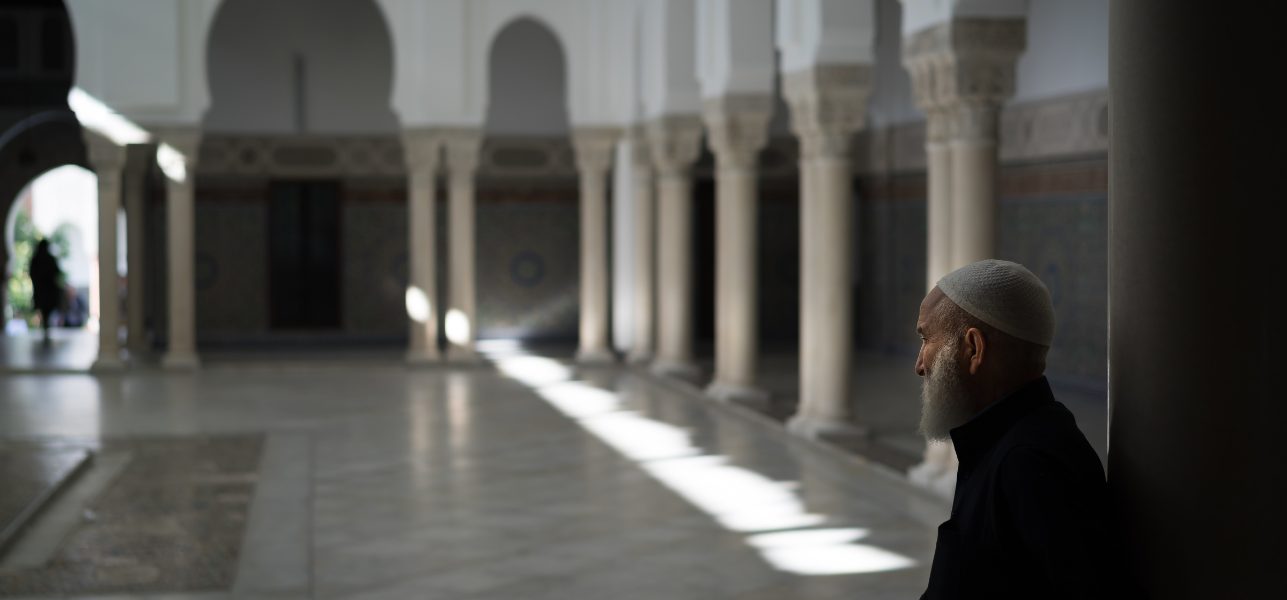
At a time when the world is intensely focused on war, peace, justice, and human dignity, silence is never neutral. It is interpreted as absence.
If a moral space is opening, one that resonates deeply with Islamic teachings, and Muslims fail to step into it, then it raises an uncomfortable question: are we truly prepared to contribute to the global moral conversation?
That would be a profoundly missed opportunity.
Because moments like this do not last.
- They demand clarity.
- They demand courage.
- And they demand confidence.
Muslims possess a rich and deeply rooted moral tradition, one that speaks powerfully about justice, mercy, reconciliation, and the sanctity of human life. The issue is not whether Islam has something meaningful to say.
The real question is whether Muslims are prepared to clearly, consistently, and publicly speak with a unified voice.
It would be inaccurate to claim that Muslim leaders are completely silent.
Scholars, organizations, and governments across the Muslim world have called for ceasefires, condemned aggression, and emphasized peace as both a moral and religious obligation.
But these voices often remain:
- fragmented
- cautious and diplomatic
- reactive rather than visionary
- unable to shape the broader global moral narrative
And that is the deeper issue.
The Real Problem
The problem is not the absence of statements. It is the absence of moral impact.
History does not simply remember who spoke.
It remembers:
- who spoke with clarity
- who spoke with courage
- who spoke with moral conviction
- who offered humanity a vision larger than political interests
This is not merely a diplomatic challenge.
It is a crisis of a unified voice for a moral leadership.
And moments like this, moments when the world is listening, are rare. They pass quickly.
If Muslims do not articulate their moral vision with confidence and unity, others will define the ethical narrative of our time without them.
The question is no longer:
Do Muslims have a message? The tradition clearly does.
The real question is:
Are Muslims willing, and able, to present that message to the world with unity, clarity, wisdom, and moral confidence?
Because if they do not, the opportunity will pass.
And once it passes, reclaiming moral relevance becomes far more difficult than preserving it in the first place.
What Happens When Moral Leadership Fails?
If Muslim leadership cannot articulate a compelling moral vision to the world, the consequences will not remain confined to conferences, statements, or diplomacy.
The world will shape the future of nearly two billion Muslims.
Because in the absence of confident moral leadership, several things begin to happen.
- Others Define Islam for Muslims
- When Muslims fail to explain their own values clearly, others will step in to define them.
The global narrative about Islam then becomes shaped by:
- geopolitical rivals
- extremist groups
- media stereotypes
- authoritarian governments
- or voices driven by fear rather than understanding
In that vacuum, Islam is no longer presented primarily through its ethics, scholarship, or spiritual depth.
It becomes associated with conflict instead of conscience.
Younger Muslims Lose Moral Confidence
Perhaps the greatest consequence is internal.
Young Muslims around the world are searching for meaning, dignity, and moral direction. They want to know how Islam speaks to justice, peace, human suffering, coexistence, and modern global challenges.
But when leadership appears fragmented, reactive, or intellectually weak, many begin to feel one of two things:
- Either disillusionment, or silence.
- While some will withdraw from public moral engagement entirely.
- Others become vulnerable to more extreme or simplistic voices that offer certainty without wisdom.
A civilization loses strength when its younger generation inherit confusion instead of confidence.
Islam Becomes Politically Present but Morally Absent
Muslims may still possess populations, states, wealth, institutions, and visibility.
But without moral leadership, visibility is not influence.
A community can be globally present yet morally absent from the conversations shaping humanity’s future.
And when that happens, Muslims are no longer contributors to civilization’s direction. They become spectators to it.
Division Deepens
Without a unifying moral language, fragmentation grows stronger:
- sectarian division
- nationalism
- ethnic rivalry
- ideological tribalism
Political dependency
The Ummah increasingly becomes a demographic reality rather than a shared moral project.
And demographics alone do not produce civilizational influence.
The Cost Is Historical
History is unforgiving toward civilizations that fail to speak during defining moral moments.
Not because they lacked numbers.
Not because they lacked resources.
But because they lacked clarity, courage, and unity when humanity was searching for moral voices.
Yet the Opportunity Still Exists
The situation is serious but not irreversible.
The Islamic moral tradition remains extraordinarily rich.
Its principles of justice, mercy, human dignity, restraint, reconciliation, and accountability still possess global relevance.
But principles alone are not enough.
They must be embodied by leaders, scholars, intellectuals, institutions, and communities capable of speaking to the modern world with wisdom, confidence, and moral seriousness.
The future may depend less on whether Muslims are heard, and more on whether Muslims are prepared to lead morally when history opens the door.