I come to you this morning with a heavy heart and with little confidence left in international institutions or the promises they make. Experience has taught us how fragile those structures are, and how often they fail the most vulnerable. My only true hope, now as always, is in Allah who is never absent, never indifferent, and never unjust. It is to Him that we turn in our despair and from Him that we draw strength.
Moments of profound crisis test not only political systems and international institutions, but also the moral foundations upon which societies claim to stand. The deepening tragedies in the Middle East—marked by devastating loss of civilian life, mass displacement, trauma, and hardened divisions—call for more than strategic calculations or competing narratives. They demand ethical reflection grounded in values that affirm human dignity, confront oppression, and resist the descent into moral chaos.
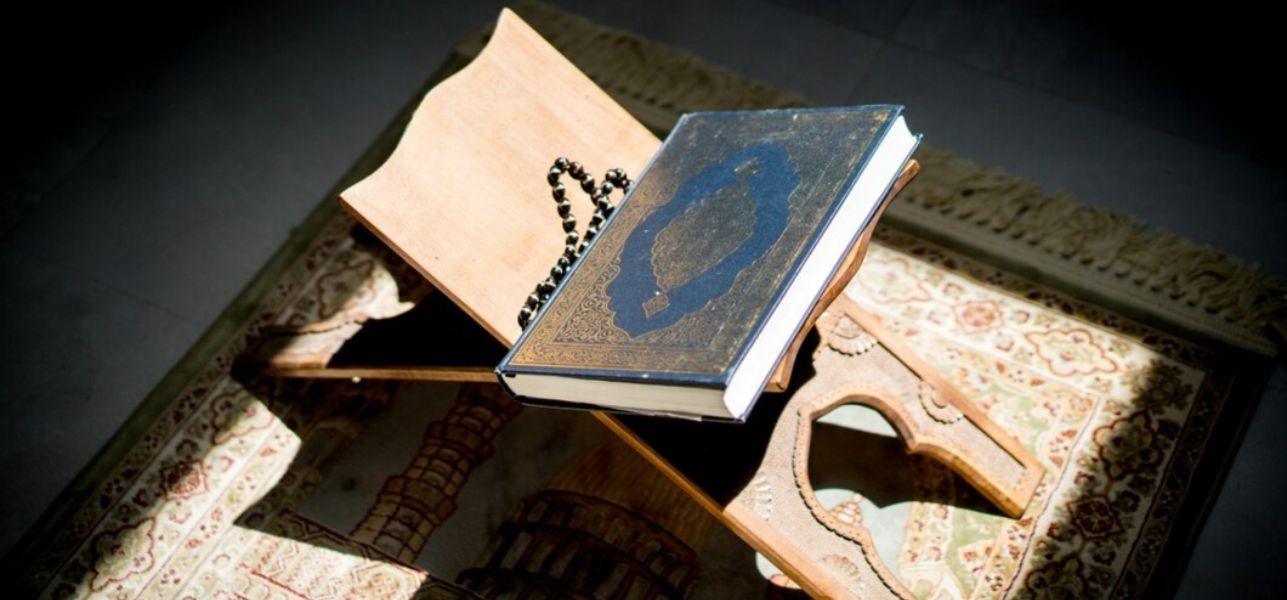
For over a billion Muslims worldwide, the Qur’an serves as a moral and spiritual compass. It is not merely a book of personal devotion, but a guide that speaks directly to injustice, aggression, suffering, and the fragile promise of peace. In times like these, its message is neither escapist nor provocative, it is profoundly human and urgently relevant.
The Qur’an frames moments of hardship not as signs of divine absence, but as occasions of moral testing.
Allah says:
“Do people think they will be left to say, ‘We believe,’ without being tested?” (Qur’an 29:2)
Crises reveal character of individuals, communities, and nations alike. They expose whether commitment to justice is conditional or principled, whether power restrains itself, and whether compassion survives fear and anger. The Qur’an consistently redirects attention away from questions of dominance toward questions of responsibility: How do human beings act when lives are at stake and emotions run raw?
At the heart of Qur’anic ethics lies an uncompromising affirmation of the sacredness of human life:
“Whoever kills a soul—unless it is punishment for murder or for spreading great corruption in the land—it is as if he has killed all humanity; and whoever saves one life, it is as if he has saved all humanity.” (Qur’an 5:32)
Revealed in a context of communal conflict, this verse establishes a universal moral boundary. No grievance, ideology, or identity can justify the indiscriminate attacks and the taking of innocent life. The Qur’an refuses to normalize attacks against civilians, collective punishment, or the reduction of human beings to abstractions or statistics.
According to CNN Israel’s parliament votes to expand death penalty for Palestinians.
The bill effectively establishes the death penalty as a punishment exclusively for Palestinians convicted of nationalistic crimes, while excluding nationalistic murders carried out by Jewish Israelis settlers against Palestinians, drawing an outcry from human rights organizations.
This is why my article states that: Every child killed, every family shattered, every life lost unjustly is a moral catastrophe, not a strategic footnote.
The Qur’an is uncompromising in its demand for justice, yet equally firm in separating justice from vengeance:
“O you who believe, be steadfast witnesses for justice for the sake of God, even against yourselves or your kin… And let not the hatred of a people cause you to act unjustly. Be just; that is closer to righteousness.” (Qur’an 4:135; 5:8)
In an age of polarization, this teaching is especially critical. The Qur’an acknowledges anger and pain but does not permit moral collapse under their weight. Justice must remain principled, proportional, and accountable—never driven by cruelty or dehumanization.
This ethic addresses all parties: oppression is forbidden, but so too is abandoning moral limits in response to it.
Crucially, the Qur’an does not call for moral neutrality in the face of aggression. Silence before oppression is itself a form of ethical failure. One of its most direct and challenging questions asks:
“And what is the matter with you that you do not struggle in the path of God and for the oppressed among men, women, and children who cry out: ‘Our Lord, rescue us from this land whose people are oppressors’?” (Qur’an 4:75)
This verse locates devotion to God in concrete solidarity with those who are wronged—particularly civilians, families, and children trapped under violence and dispossession. Supporting the oppressed is not merely a political option; it is a moral obligation.
Similarly, the Qur’an affirms the legitimacy of resisting aggression:
“Permission has been granted to those who are attacked because they have been wronged—and surely God is able to grant them victory.” (Qur’an 22:39)
Resistance here is framed not as conquest, but as the defense of dignity and protection from injustice. Yet even this right is morally bound.
While the Qur’an permits resistance to oppression, it imposes strict ethical limits on the use of force:
“Fight in the way of God those who fight you, but do not transgress. Indeed, God does not love transgressors.” (Qur’an 2:190)
Classical Islamic ethics, grounded in this principle, prohibit targeting non-combatants, harming civilians, destroying homes, or weaponizing starvation and fear. The Qur’an thus rejects two dangerous extremes: passivity that abandons the oppressed, and moral nihilism that excuses unlimited violence.
True resistance, in the Qur’anic vision, seeks to end injustice without reproducing it.
Against narratives that divide the world into irreconcilable camps, the Qur’an invokes humanity’s shared origin:
“O humankind, We created you from a single male and female and made you peoples and tribes so that you may know one another.” (Qur’an 49:13)
Difference, in this view, is meant to foster mutual recognition—not domination. The Qur’an consistently affirms that dignity does not belong exclusively to one people or one faith. This moral universalism challenges all forms of dehumanization, whether based on race, religion, or nationality.
Another essential Qur’anic principle—often overlooked in times of crisis—is the call for unity and collective responsibility among Muslims:
“Hold firmly, all together, to the rope of God, and do not become divided.” (Qur’an 3:103)
The Qur’an does not deny diversity within the Muslim world—of cultures, languages, schools of thought, or political systems. What it condemns is fragmentation that leads to weakness, rivalry, and paralysis:
“Do not dispute, lest you lose courage and your strength depart.” (Qur’an 8:46)
Disunity has consequences. When moral concern is not matched by coordination, injustice proceeds unchecked and the oppressed are left unprotected.
The contemporary crises of the Middle East demonstrate that shared faith and sympathy alone are insufficient. The Qur’an’s vision of solidarity implies more than emotional identification; it calls for organized cooperation:
A Qur’an-inspired approach to unity would not require a single state or ideology. Rather, it would encourage cooperation in humanitarian relief, diplomatic advocacy, legal accountability, economic coordination, and the protection of civilians—allowing Muslim-majority societies to act together without acting alike.
“Help one another in righteousness and justice, and do not help one another in sin and aggression.” (Qur’an 5:2)
Where are the institutions of the Muslim world, and why are they not exerting their full moral, political, and diplomatic influence to mediate this conflict and protect innocent lives?
History will judge not only those who wage war, but also those who had the power to intervene and chose silence, or indifference.
“If you do not stand together, there will be chaos and great corruption in the land.” (Qur’an 8:73)
Underlying all these principles is the Qur’anic understanding of power as a trust (amānah). Authority—whether military, political, or economic—is never portrayed as an unrestricted right, but as a responsibility for which one is accountable before God.
To misuse power, whether through oppression or indifference, is a moral failure that ultimately corrodes societies from within.
Finally, the Qur’an offers hope grounded in responsibility rather than wishful thinking:
“God does not change the condition of a people until they change what is within themselves.” (Qur’an 13:11)
Peace is not presented as a miracle imposed from above, but as the fruit of ethical transformation—of leaders, institutions, and communities willing to place justice above expedience and humanity above fear.
In times of war and upheaval, the Qur’an does not ask whom we oppose, but who we choose to become. It demands solidarity with the oppressed, restraint in the use of power, unity against fragmentation, and fidelity to justice even when emotions run high.
If the Muslim world does not learn from this conflict to be united, I don’t see what kind of future it will have.
In a world increasingly defined by blocs and alliances, isolation and fragmentation will no longer work.
O people of faith,
Allah calls us to unity not as an ideal, but as a duty: Allah says to us:
“And hold firmly to the rope of Allah all together and do not become divided.” (Qur’an 3:103)
Our divisions— sectarian, ethnic, national, and political—have weakened us and multiplied the suffering of our people.
True unity does not require uniformity, but it does require justice, mercy, and mutual responsibility.
“Indeed, Allah commands justice, excellence, and care for others.” (16:90)
The best interest of the Muslim world lies in:
Protecting human dignity (karāmah)
Ending oppression (ẓulm) wherever it occurs
Honoring life as sacred
Resolving disputes through consultation (shūrā) and wisdom, not violence.
“The believers are but brothers and sisters, so make peace between them.” (49:10)
Unity begins with moral courage:
to place the welfare of the people above power,
truth above faction,
and mercy above vengeance.
Let us renew our covenant with Allah and place the true interests of our people above our fears of one another, above our narrow sectarian shelters, and above everything that continues to divide us.
May Allah guide the Muslim world toward unity rooted in faith, wisdom, and compassion—for our own sake and for the peace of the world.
O Allah
soften our hearts and quiet our fears.
Bring healing and justice to the Middle East
and to every place wounded by conflict.
Guide leaders toward wisdom,
neighbors toward understanding,
and all people toward dignity and care for one another.
Let peace take root in our words, our choices,
and our shared humanity.
Amen.