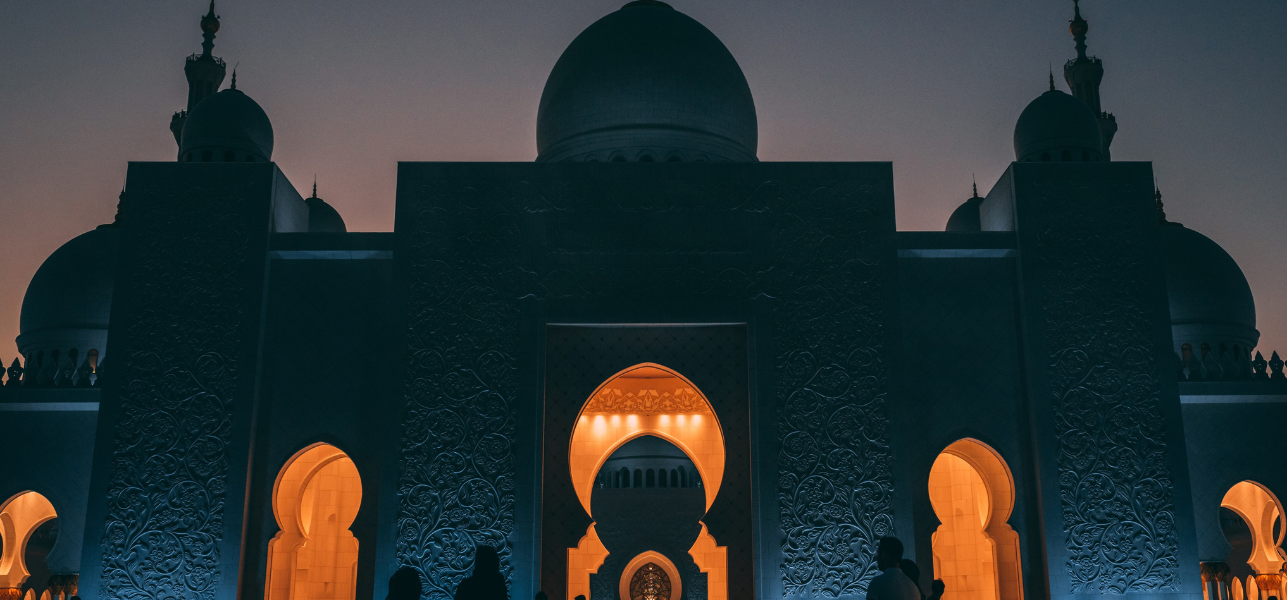
For some time now, I have made it a habit to arrive at the mosque about thirty minutes before the Friday khutbah. I do so deliberately. While the khutbah is an important part of Jumu’ah, it is essentially a monologue. I wanted to create an opportunity for dialogue.
Those minutes before prayer have become one of the most meaningful parts of my week. Brothers gather, greetings are exchanged, questions are raised, experiences are shared, and together we reflect on our faith and our responsibilities as Muslims. I often remind those presents that one of the great purposes of coming together on Friday is not only to pray together, but also to strengthen our relationships as a community.
A strong community is built through worship, but it is also built through conversation, learning, trust, mutual support, and sincere efforts to understand Allah’s guidance.
One Friday, a brother asked me a question that led to a thoughtful discussion:
“Do you believe music is haram?”
I replied:
“If Allah did not declare it haram in the Qur’an, I cannot declare it haram.”
My answer surprised some of those present because many Muslims have heard throughout their lives that music is forbidden. As our discussion continued, I realized that the real issue was not music itself. The deeper question was:
Who has the authority to declare something haram?
Returning to the Qur’an
Whenever Muslims disagree on an issue, our first responsibility is to return to the Qur’an and examine what Allah has actually said.
The Qur’an repeatedly warns believers against attributing rulings to Allah without clear authority. Allah says:
“Do not say falsely concerning what your tongues assert, ‘This is lawful and this is forbidden,’ inventing lies against Allah.” (16:116)
This verse is not merely a warning against deliberate falsehood. It is also a reminder that declaring something halal or haram is a serious matter. Such judgments belong to Allah.
The Qur’an is remarkably clear when it declares something forbidden. It does not leave believers guessing about the major prohibitions. Allah identifies them openly and repeatedly.
One of the most powerful passages appears in Surah Al-An’am:
“Say: Come, I will recite what your Lord has forbidden to you…” (6:151)
What follows is a list of fundamental prohibitions and commandments that form the moral foundation of a righteous life.
When I studied the Qur’an carefully, I identified a number of explicit prohibitions, including the ten moral commands found in Surah Al-An’am and the dietary prohibitions mentioned elsewhere in the Qur’an.
What struck me was not only what Allah prohibited, but also what He did not prohibit.
Among the explicit prohibitions, I found no verse in which Allah says:
“Music is forbidden.”
This observation does not by itself settle every discussion. However, it does require us to pause and reflect before attributing such a prohibition directly to Allah.
Respecting the Limits of Human Authority
Throughout Islamic history, scholars have worked tirelessly to understand and apply divine guidance. We owe them respect and gratitude for their efforts.
At the same time, respect for scholarship should not lead us to confuse scholarly opinion with divine revelation.
Human beings interpret.
Allah legislates.
Human beings reason.
Allah reveals.
Human beings may agree or disagree.
Allah alone possesses ultimate authority.
For this reason, I believe Muslims must carefully distinguish between:
- What Allah has explicitly prohibited.
- What scholars inferred, interpreted, or concluded.
The distinction is important because sincere scholars can disagree with one another, but Allah’s word remains constant.
To say, “Some scholars considered music forbidden” is one thing.
To say, “Allah clearly prohibited music in the Qur’an” is another.
The first statement acknowledges a human interpretation.
The second attributes a ruling directly to Allah.
As Muslims, we should be careful not to blur the line between the two.
The Example of Prophet Dawud
While reflecting on the question of music, my thoughts naturally turned to Prophet Dawud (peace be upon him).
The Qur’an describes the extraordinary beauty of his praise of Allah:
“O mountains, echo with him in praise, and the birds as well.” (34:10)
And again:
“Indeed, We subjected the mountains to glorify with him in the evening and at sunrise.” (38:18)
The Qur’an presents this as a blessing from Allah.
Whether we describe it as melody, beautiful recitation, or harmonious praise, the image is powerful. Dawud’s voice was so beautiful that the mountains and the birds joined him in glorifying Allah.
The Qur’an consistently portrays the universe as filled with worship. Birds, mountains, stars, thunder, and all creation glorify their Lord in ways known to Him.
This is not the picture of a silent universe.
It is the picture of a universe alive with praise.
The lesson I draw from these verses is not that all sounds are sacred or that every form of entertainment is beneficial. Rather, it is that beauty, harmony, and the human capacity to express praise through sound are gifts from Allah.
The Qur’an does not condemn beauty.
It calls us to use every blessing in the remembrance of God.
Strengthening Community Through Thoughtful Dialogue
The most valuable part of that conversation at the mosque was not the conclusion. It was the conversation itself.
Communities are strengthened when people feel free to ask sincere questions without fear of being judged.
We should be able to discuss important issues respectfully, even when we may not fully agree.