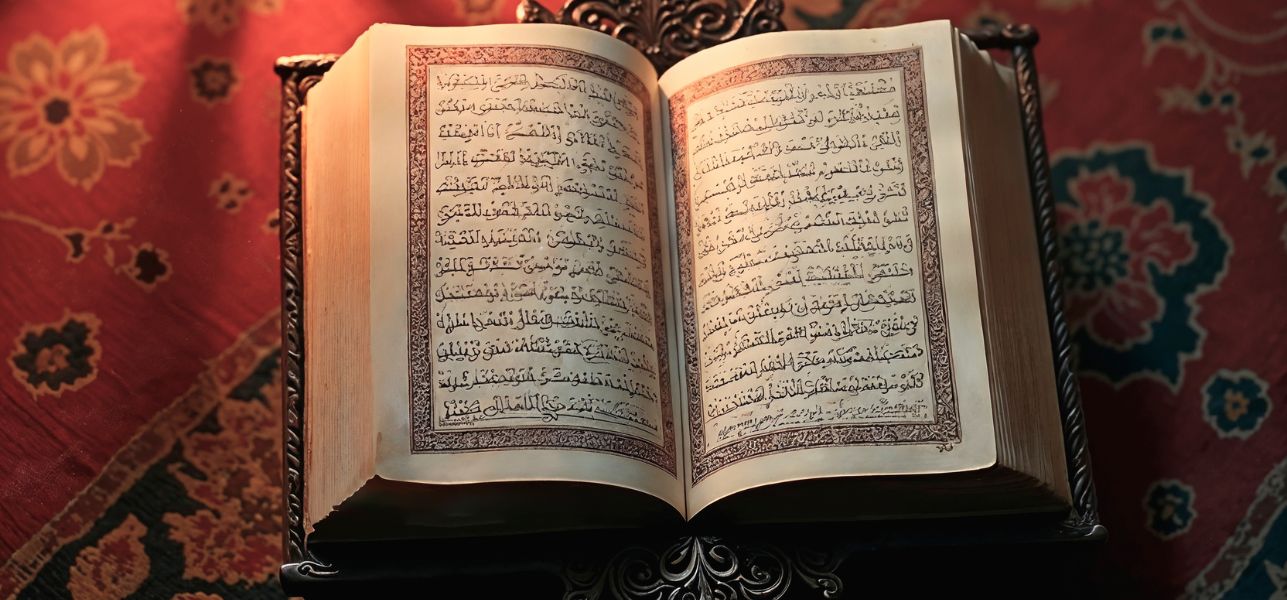
When I read in the Qur’an about a future event, I do not view it as something to passively await. Rather, I see it as a call to action a divine invitation to participate in bringing about the conditions that make such a future possible. The Qur’an was not revealed to produce spectators of history, but to cultivate conscious agents of change who strive to improve themselves and the society around them.
Many Muslims read Qur’anic references to future victories, renewal, justice, or the flourishing of faith as promises that will inevitably unfold regardless of human effort. I believe this misses a central Qur’anic principle: God changes the condition of a people when they undertake the work of changing themselves. Divine promises are not an excuse for passivity; they are a source of hope, motivation, and responsibility.
The condition of the Muslim world will improve when Muslims return to the Qur’an not merely as a text to be recited, but as a guide to be understood, reflected upon, and implemented. Every reader should approach the Qur’an with the awareness that it is speaking directly to him or her, challenging assumptions, inspiring vision, and demanding action. Its verses are not only descriptions of reality; they are directions for transforming reality.
Deep reflection on the Qur’an leads naturally to planning, creativity, and constructive engagement with the world. It encourages believers to seek knowledge, pursue excellence, establish justice, develop their communities, and serve humanity. When Muslims read the Qur’an with this mindset, they move from asking, “When will God’s promise be fulfilled?” to asking, “What must I do today to help fulfill God’s purposes on earth?”
This understanding lies at the heart of the Qur’anic concept of khilāfah. When God announced to the angels, “Indeed, I will place a khalifah on earth” (2:30), He declared His intention to create a conscious, morally responsible human being capable of knowledge, choice, and purposeful action. This is further emphasized in His statement concerning Adam: “When I have fashioned him and breathed into him of My Spirit, fall down before him in prostration” (15:29). By breathing His Spirit into Adam, God endowed human beings with unique capacities that distinguish them from the rest of creation: the ability to reason, reflect, learn, imagine, create, and freely choose between right and wrong.
The role of the khalifah, therefore, is not to passively observe history unfold but to participate actively in shaping it according to God’s moral purposes. Human beings are entrusted with the responsibility of cultivating the earth, establishing justice, seeking knowledge, building civilizations, and contributing to the flourishing of life. The future described in the Qur’an is not merely something to await; it is a vision that believers are called to help realize through faith, wisdom, and action.
This perspective changes the way we read every Qur’anic promise. Instead of treating God’s promises as guarantees that require nothing from us, we should see them as invitations to align ourselves with God’s guidance and become instruments of positive change. The Qur’an consistently links divine assistance with human effort, trust in God with responsible action, and hope with perseverance. Believers are instructed to act, strive, think, learn, and work for the common good while relying on God for guidance and success.
Much of the stagnation that afflicts Muslim societies today stems from a disconnect between faith and action. Muslims often celebrate the greatness of their past and long for a better future, yet insufficient attention is given to the difficult work of transformation in the present. The Qur’an calls us to move beyond nostalgia and wishful thinking. It asks us to engage with the realities of our age, acquire beneficial knowledge, develop solutions to human problems, and become contributors to human progress.
If every Muslim approached the Qur’an as a personal call to responsibility rather than merely a source of inspiration or comfort, a profound transformation would begin. The Qur’an would no longer be viewed only as a book to be recited but as a blueprint for personal development, social reform, intellectual growth, and civilizational renewal. Its message would energize believers to become thinkers, educators, scientists, entrepreneurs, reformers, and peacemakers who embody its values in the world.
Conclusion
The Qur’an was revealed not only to inform us about the future but also to prepare us to create it. Its descriptions of what lies ahead should inspire action rather than passivity, responsibility rather than resignation, and hope rather than complacency. God’s promise of a better future is not addressed to idle spectators but to human beings whom He appointed as khulafā’ on earth and endowed with the capacities needed to fulfill that trust.
To be a khalifah is to recognize that faith carries responsibility, that knowledge must lead to action, and that reflection must lead to transformation. The Muslim world will begin to change when Muslims read the Qur’an with the conviction that it speaks directly to them, calling them to rise above the status quo and participate in God’s ongoing work of bringing justice, mercy, wisdom, and human flourishing to the earth.
The question, therefore, is not merely whether God’s promises will come true. They will. The real question is whether we will be among those who dedicate their lives to helping realize them. That is the challenge, the honor, and the purpose of being God’s khalifah on earth.